Most marketing strategy assumes audiences scale predictably. Spend more, reach more people, generate more outcomes. That logic works for consumer products. It breaks down completely at the top end of the market.
High-value customers do not behave like scaled versions of average consumers. They behave like a different system entirely.
In 2026, attention itself has become stratified. The same economic forces that concentrate wealth are now concentrating attention, trust, and access. Brands that continue to rely on mass media tactics are not merely inefficient. They are invisible to the audiences that matter most.
Reaching high-net-worth individuals requires a different architecture, not a better campaign.
Reach is No Longer the Objective
The modern consumer encounters thousands of digital impressions every day. For affluent audiences, exposure has produced the opposite of engagement. It has produced avoidance.
The wealthiest consumers increasingly operate inside ad-reduced or ad-free environments. The 2025 Altiant Millionaire Media Study found that 85 percent of HNWIs actively prioritize media experiences with minimal advertising. Higher-income households are also significantly more likely to subscribe to premium streaming platforms and paid editorial ecosystems.
In other words, the audiences brands value most are systematically removing themselves from traditional advertising infrastructure.
This creates a counterintuitive reality. High reach often signals poor targeting. If everyone sees the message, the intended audience likely ignores it.
Effective strategy now resembles private distribution rather than public broadcasting. Placement matters less than context. A single appearance inside a trusted niche publication or invitation-only newsletter can outperform millions of impressions delivered elsewhere.
The Rise of Digital Private Spaces
Wealth has always clustered geographically. Increasingly, it clusters digitally as well.
As income rises, media consumption becomes narrower, not broader. High-value audiences spend less time in open feeds and more time in curated environments defined by expertise, reputation, and shared identity.
These spaces are rarely visible through traditional analytics. Conversations move through private Slack groups, closed communities, encrypted messaging channels, and professional networks built around industry trust rather than algorithmic discovery.
Access to these environments is earned slowly and lost quickly. Advertising cannot buy entry. Credibility can.
At the same time, artificial intelligence has introduced a new layer of filtration. Many affluent consumers now rely on AI assistants to summarize research, evaluate options, and surface recommendations. The first brand presented by a trusted system increasingly becomes the only brand considered.
Visibility is shifting from feeds to answers.
Trust Compounds Differently at the Top
Mass marketing optimizes for conversion velocity. High-value marketing optimizes for relationship equity.
For affluent audiences, trust rarely originates from advertising exposure. It travels through professional networks, referrals, and demonstrated expertise. Deloitte research consistently shows that wealthy consumers place far greater weight on peer recommendations than on paid media.
This changes the role of marketing entirely. The objective is no longer attention alone. It is credibility within a network.
Direct sponsorships, private events, proprietary research, and long-form intellectual content outperform viral formats because they signal investment rather than promotion. They demonstrate seriousness, which is itself a filtering mechanism.
At the highest levels of purchasing power, reputation functions as distribution.
The Privacy Shift
Privacy regulation and behavioral change are converging toward the same outcome. The most valuable audiences are becoming harder to track and easier to alienate.
Third-party data strategies lose effectiveness when users actively limit surveillance. High-value individuals are often early adopters of privacy tools, subscription ecosystems, and controlled digital identities.
Yet this does not mean they reject engagement. It means engagement must be permission-based.
Dentsu’s recent media trends research highlights growing responsiveness among affluent consumers to zero-party data exchanges, situations where individuals voluntarily share preferences in return for tangible value. Access is granted when interaction feels useful rather than extractive.
Brands succeeding in this environment are not interrupting attention. They are earning invitations into it.
Precision is the New Scale
Scaling a high-value media strategy does not mean reaching more people. It means reaching the right people more consistently.
The goal is not ubiquity. It is inevitability. The brand should appear precisely at the moment a decision is forming, inside environments already trusted by the audience.
This often looks quieter than traditional marketing. Fewer impressions. Smaller audiences. Longer timelines. Stronger outcomes.
What changes is not visibility but efficiency.
Why This Matters
Marketing infrastructure was built for a mass economy. Wealth concentration is producing a precision economy instead.
The audiences controlling disproportionate purchasing power now exist behind layers of curation, privacy, and trusted networks. Strategies optimized for scale struggle because they were designed for openness, not selectivity.
High-value customers are not unreachable. They are insulated.
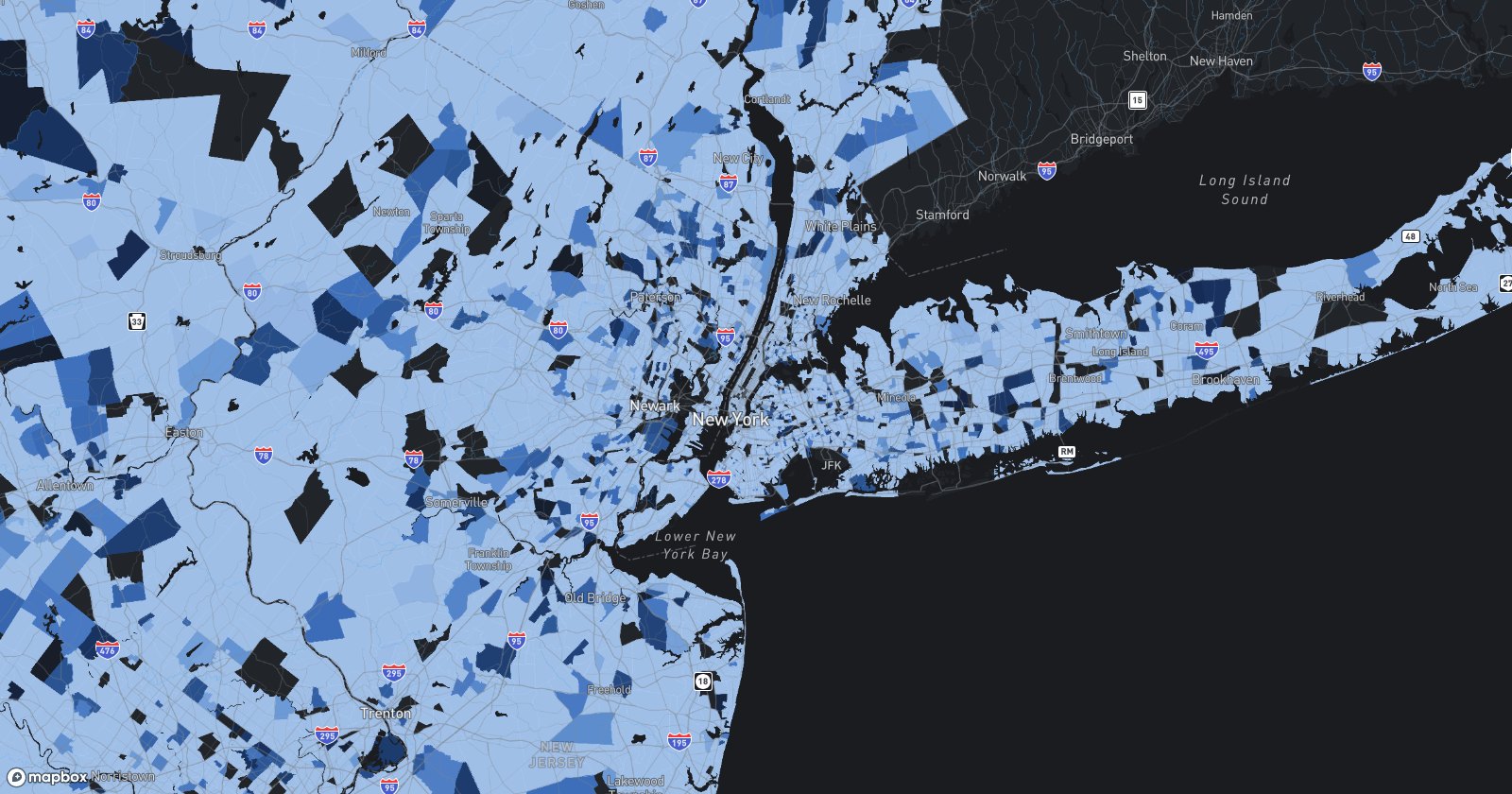
Most brands underestimate how measurable this insulation has become these days. Affluent audiences are not just harder to reach; they are structurally segmented across verified data layers, private communities, and credentialed environments. When you map these layers correctly, patterns emerge. Decision-makers cluster. Capital signals align with specific content ecosystems. Once you see the map, media stops being guesswork and becomes the key to the puzzle.
At Calder, we approach media strategy as an infrastructure problem. Attention follows trust, trust follows context, and context follows where capital already concentrates. Brands that understand this shift stop competing for impressions and start building access.